

Solibri Model Checker is a world-leading tool for model-based quality management. This software enables users to perform comprehensive model checks, ranging from simple clash detection to accessibility verification and evacuation route analysis. In addition to this feature, Solibri is also one of the most powerful IFC viewers on the global market.
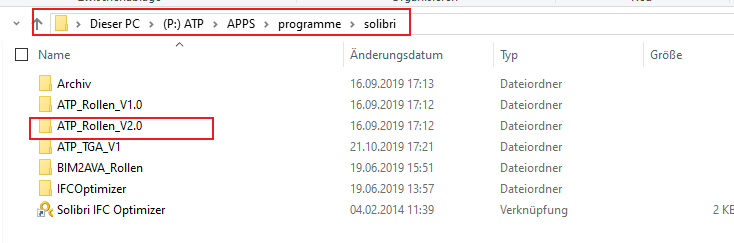
This article describes how to use the TGA Solibri role and how to use it with model checks.
This article describes how to use the MEP role (template) in Solibri: The role consists of component classifications and rulesets. With a classification in Solibri, you can quickly check whether the correct elements/components (e.g., Revit families) are being used. It is also a great help when writing rulesets.
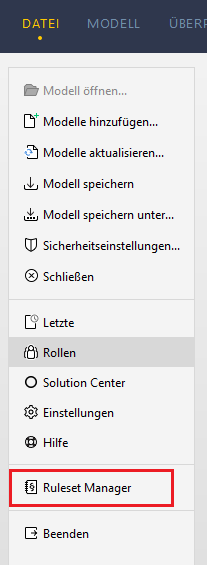
Similar to the classification, the rulesets are already included in the template. If necessary, new ones can be created using the Ruleset Manager.
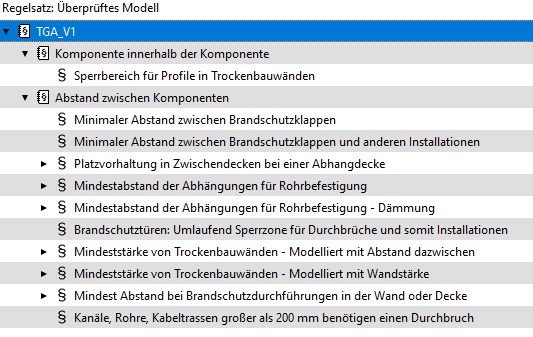
The current rule set structure is shown in the figure below. The names refer to the type of check, and each rule includes a brief description of its purpose.
The results of the rules are shown below. Some of them have specific conditions that must be met in order to obtain a meaningful result.
- The minimum distance between fire dampers should be at least 150 mm
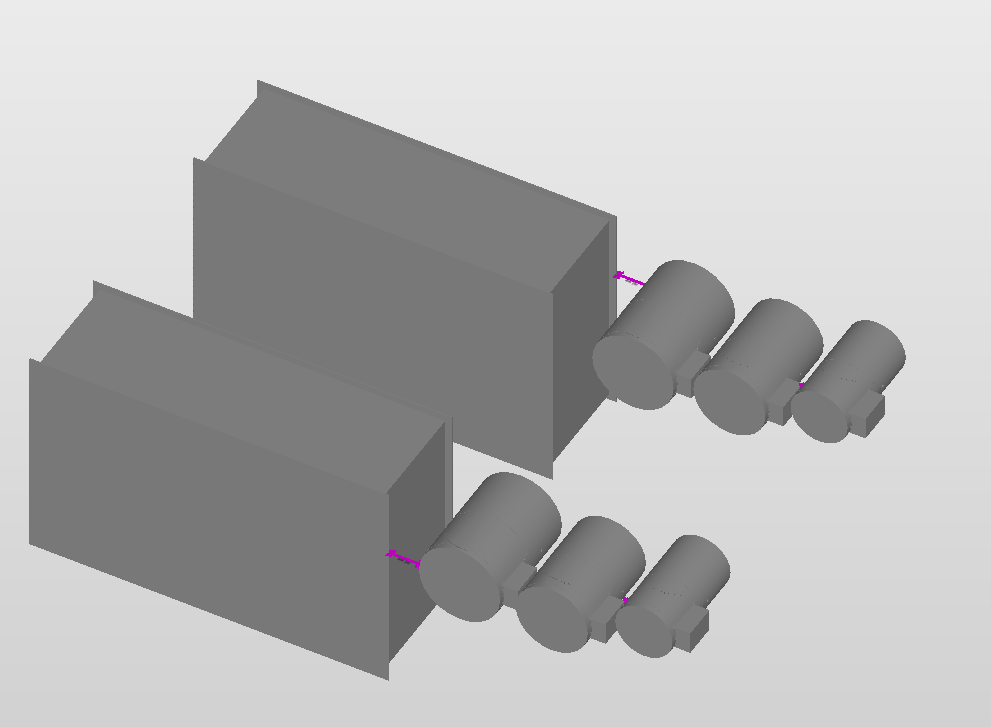
The rule identifies all fire dampers and calculates the distances between them. The desired distance between the components can be adjusted on a project-by-project basis if the manufacturer has specific requirements.
- The minimum clearance between fire dampers and other installations should be at least 200 mm.
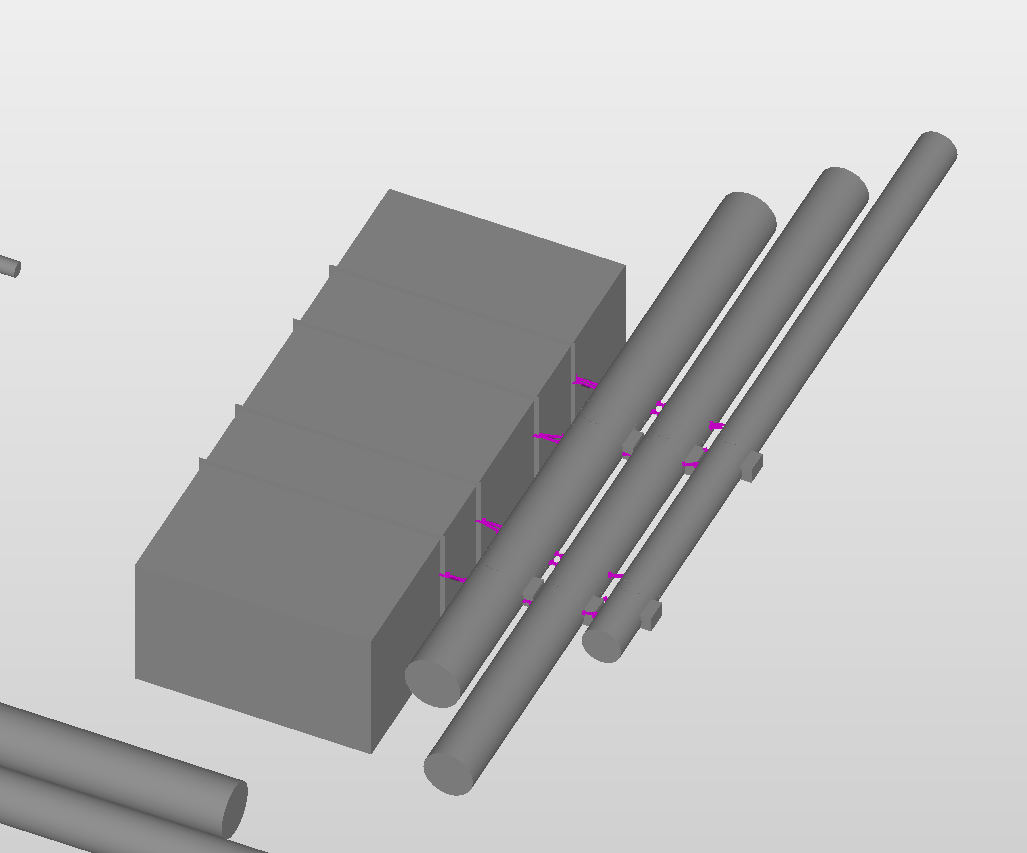
All KHLS and electrical installations are listed, and the distances to the fire dampers are compared. Sometimes, components that are directly connected to the fire damper itself are flagged as errors—this can be ignored.
- Clearance in false ceilings for a suspended ceiling—at least 100 mm (flexible ducts are not included in this measurement).
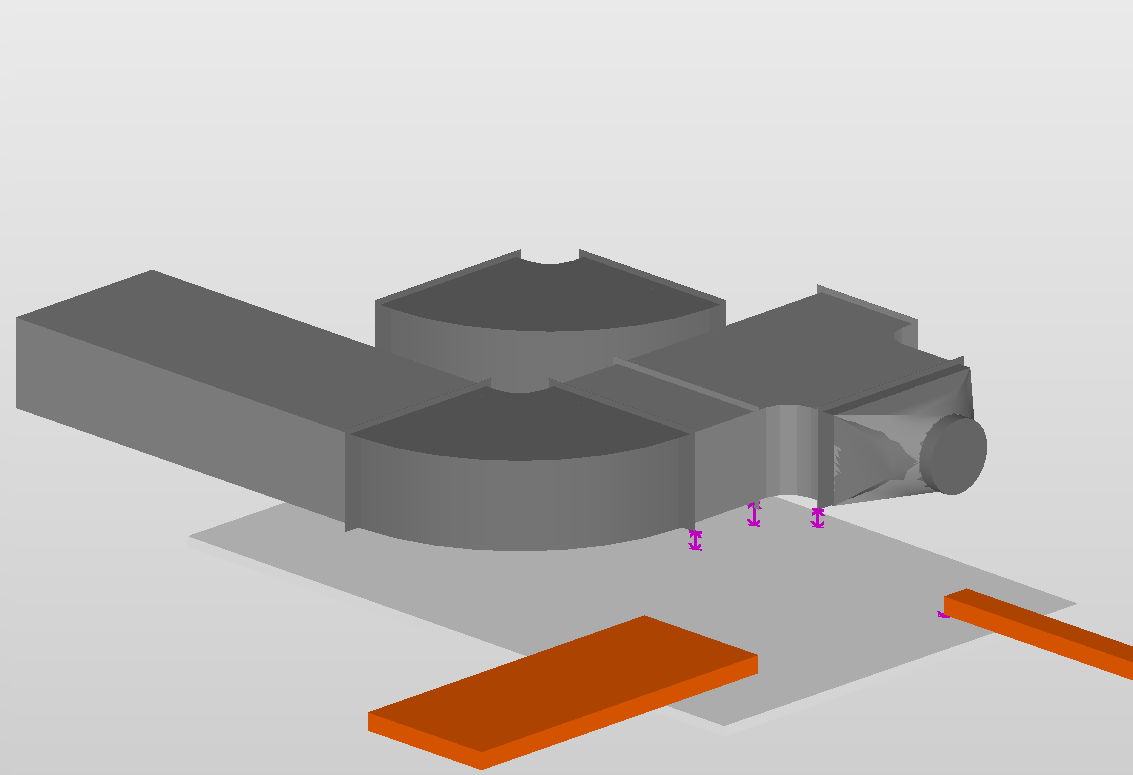
Normally, the beams that support the ceilings are not modeled, but they must still be taken into account when placing the utilities.
- Minimum spacing between hangers for pipe fastenings (100 mm for DN 50 and larger). There are two versions of the rule; one takes pipe insulation into account, while the other does not (flexible pipes are not considered).
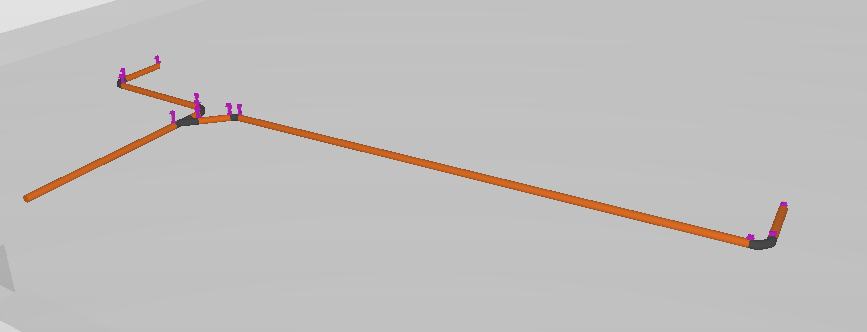
Use this specific rule to check the clearance between pipes with a diameter greater than DN 50 and the floor slabs above them.
- A 20-cm clearance zone around the perimeter for openings and, consequently, for installations in fire doors.
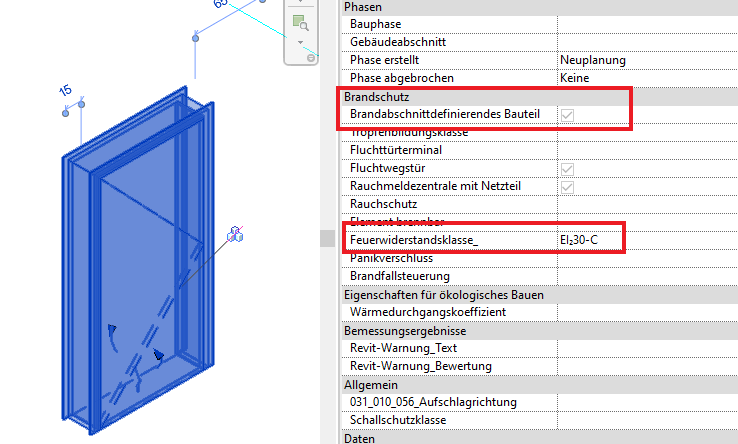
To run a successful test, it is necessary to populate certain parameters in the model with the correct values.
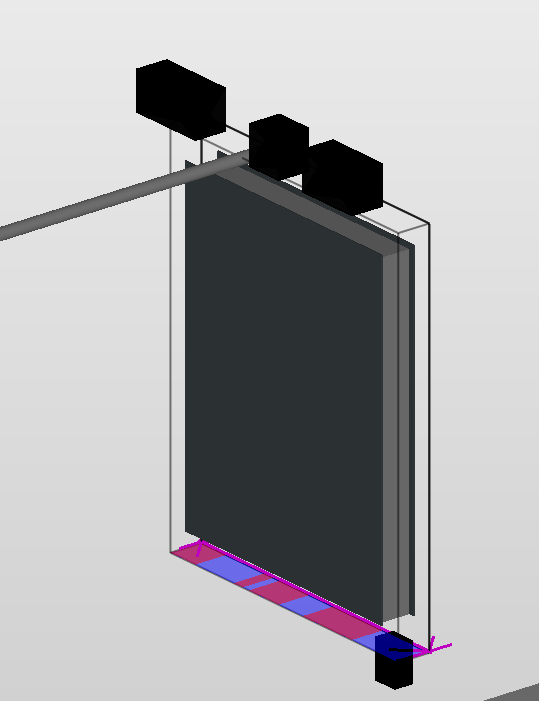
This is a simple rule that checks whether there are any installations located too close to the fire door.
- Minimum thickness of drywall (cladding) when concealed piping is included (for a DN 100 wastewater pipe, the wall cavity should be at least 150 mm).
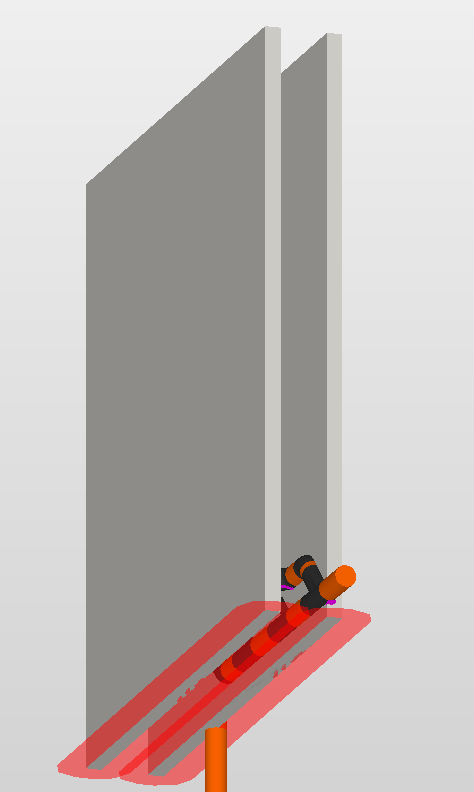
There are two versions of the rule. The first checks the distances between a wall (any wall) and a facing shell when it is modeled with clearance. The other version checks the distances when the pipes are located within the wall. Critical errors occur when two walls are close together (image above). The rest can be ignored.
- The minimum clearance between fire-rated penetrations and installations (pipe penetrations) should be at least 50 mm.
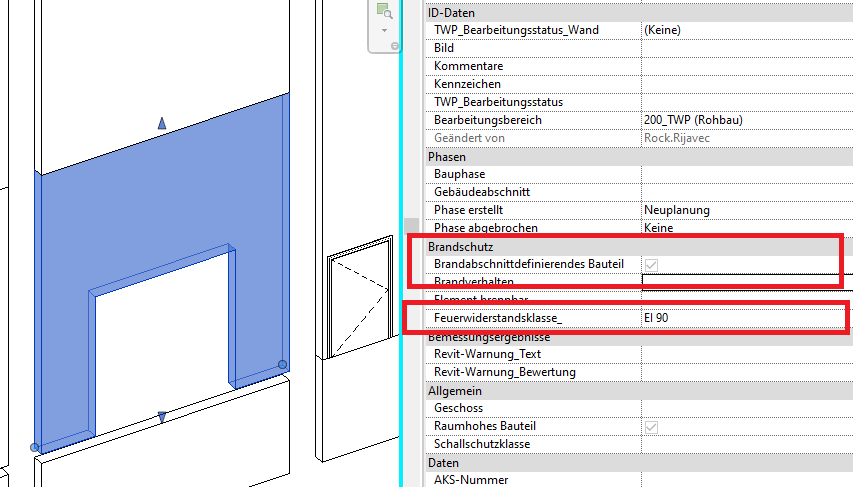
In order for the analysis to be performed successfully, it is first necessary to enter the correct parameters (for walls and floor slabs) into the model.
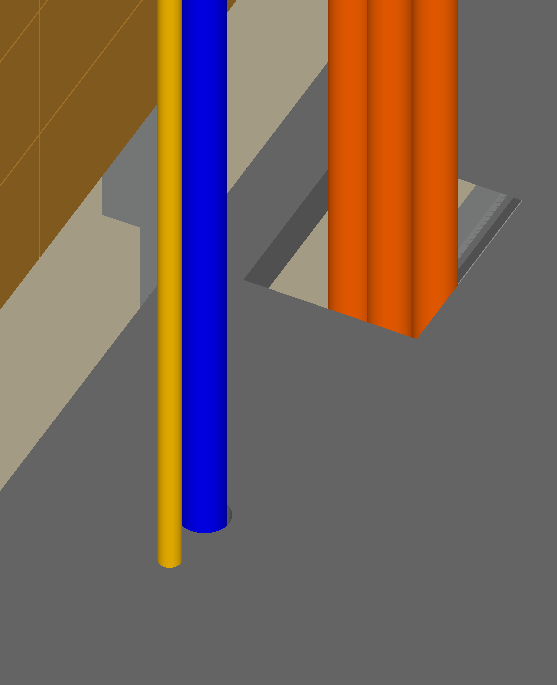
The rule assumes that the pipes will run through openings that should be provided in the walls and floor slabs.
- Channels, pipes, and cable trays larger than 200 mm that cut through a GIP cardboard wall require a cutout.
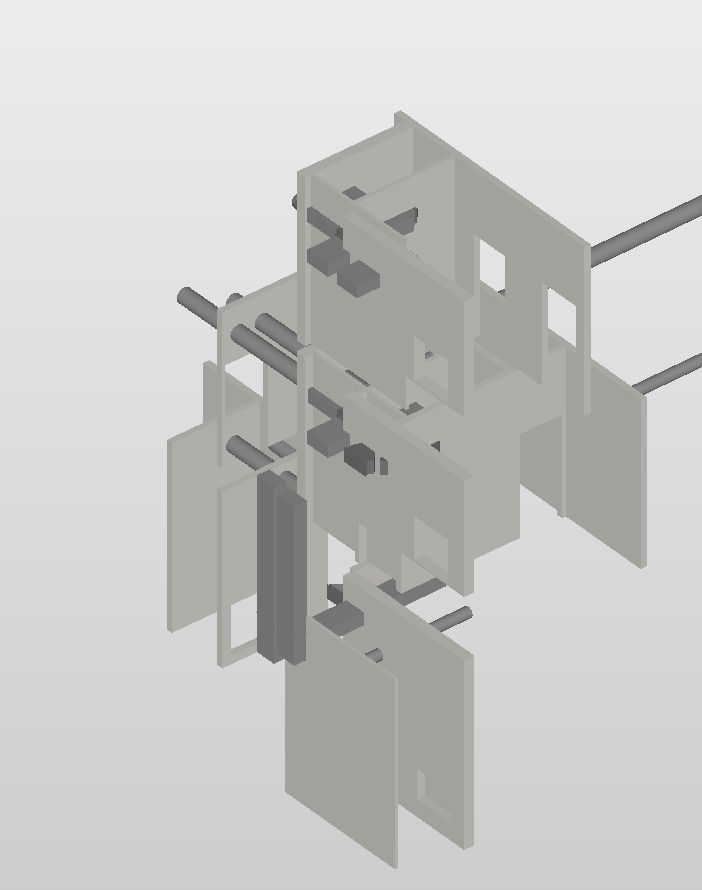
This is an additional rule that applies when the dimensions of the installations are too large and a conduit needs to be installed in the drywall.
- Reserving the edges of drywall panels as a restricted area for installations—100 mm for profiles.
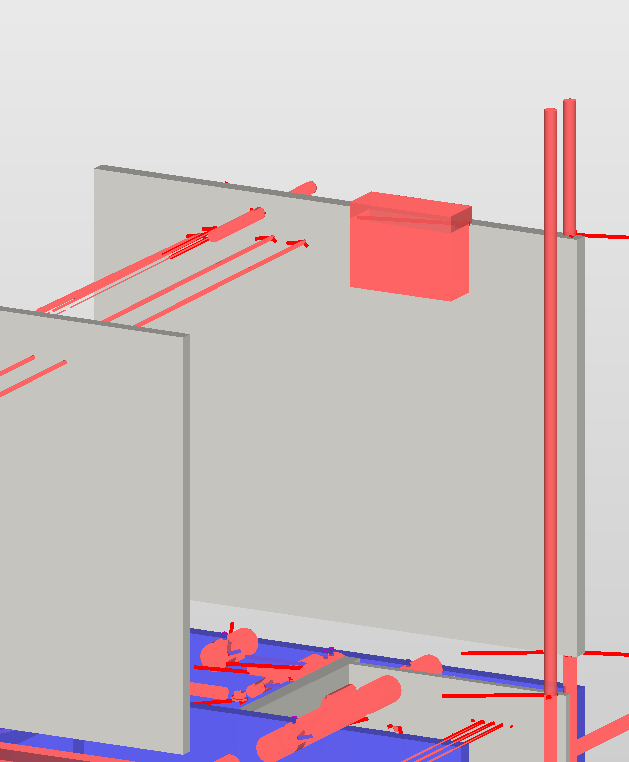
In this case, check whether there is enough space at the edges of the drywall panels for the studs that support the wall.

Unfortunately, this content is available only to our Pro users.
If you'd like to read the full article, try the Pro account or become a Pro user.